Naxos Marble Workshop And Quarry Tour: What Each One Is
One is a three-hour carving session where you take a piece of Naxos marble home. The other is two ancient quarry sites holding abandoned colossal statues, reached only on island bus tours. They share a material and nothing else.
Short answer
The 3-Hour Marble Carving Workshop costs from €85 per person, lasts 3 hours and takes guests from age 12 up, rated 4.9 from 136 reviews. The quarry kouroi at Melanes and Apollonas appear on island bus tours, from €30 per person, and no dedicated quarry tour exists.
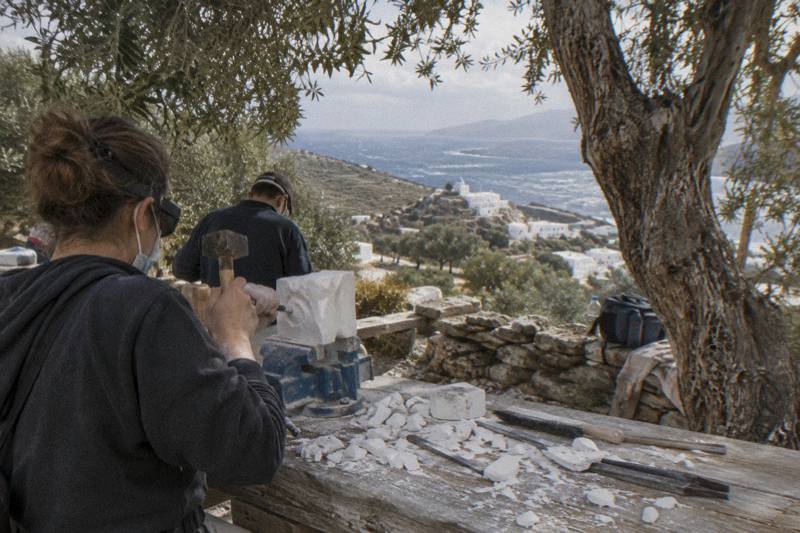
Naxos marble shaped the island's antiquities and its villages, and today it shapes two very different days out. The first is a hands-on workshop: three hours in an olive grove, a block of local stone, electric and manual tools, and a carved souvenir to take home. The second is not a product at all. The ancient quarries at Melanes and Apollonas hold two colossal unfinished statues, and the only way travelers reach them is on general island bus tours that name the quarry stops in their routes.
The Naxos Island Tour pages keep the two apart because they are bought for different reasons: one is about making something, the other about standing in front of something made in antiquity and never finished. The Ephorate of Antiquities of the Cyclades describes both quarry sites and their abandoned kouroi in detail, and those official descriptions, together with the trip entries themselves, are what the comparison below rests on.
What Is The Naxos Marble Carving Workshop?
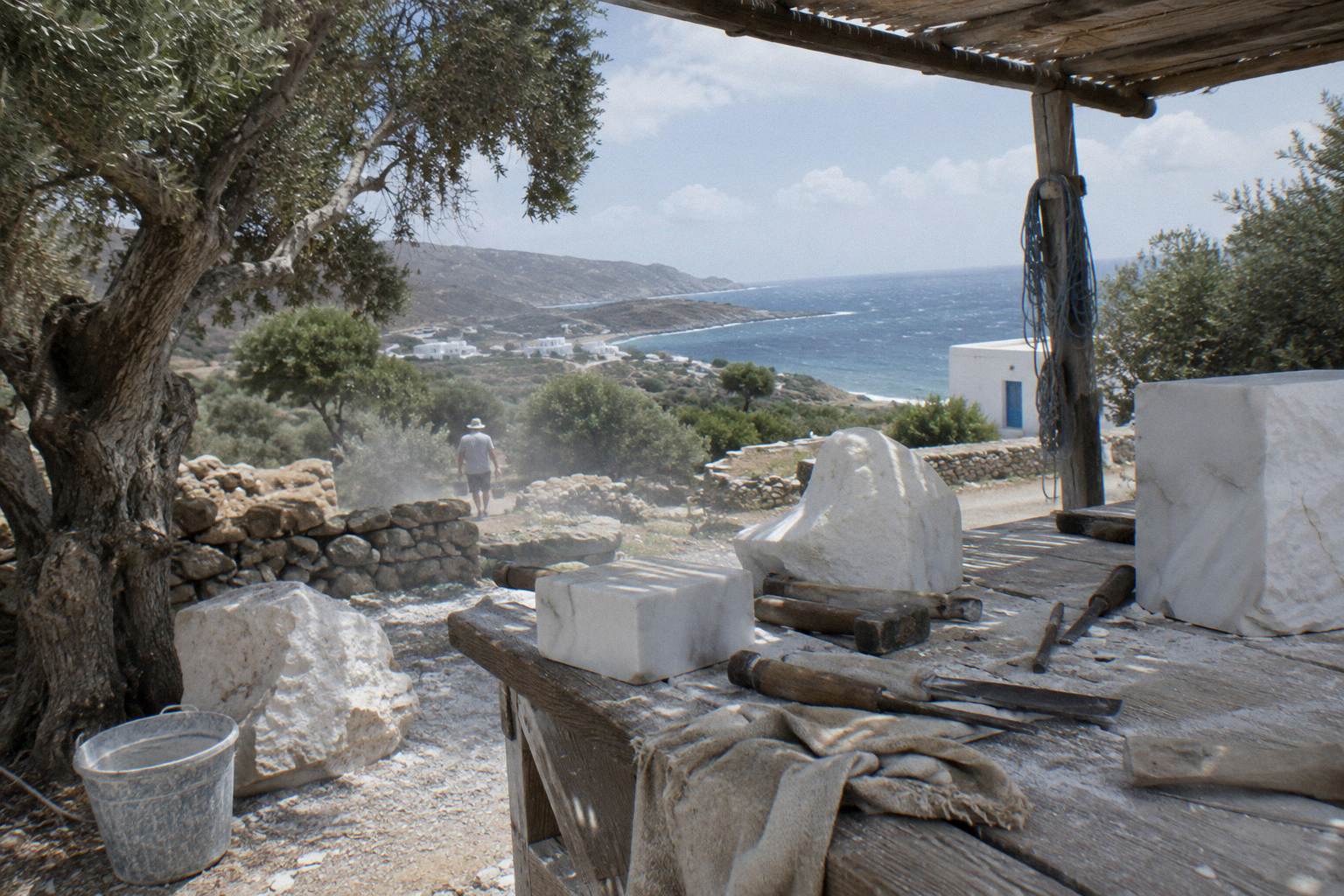
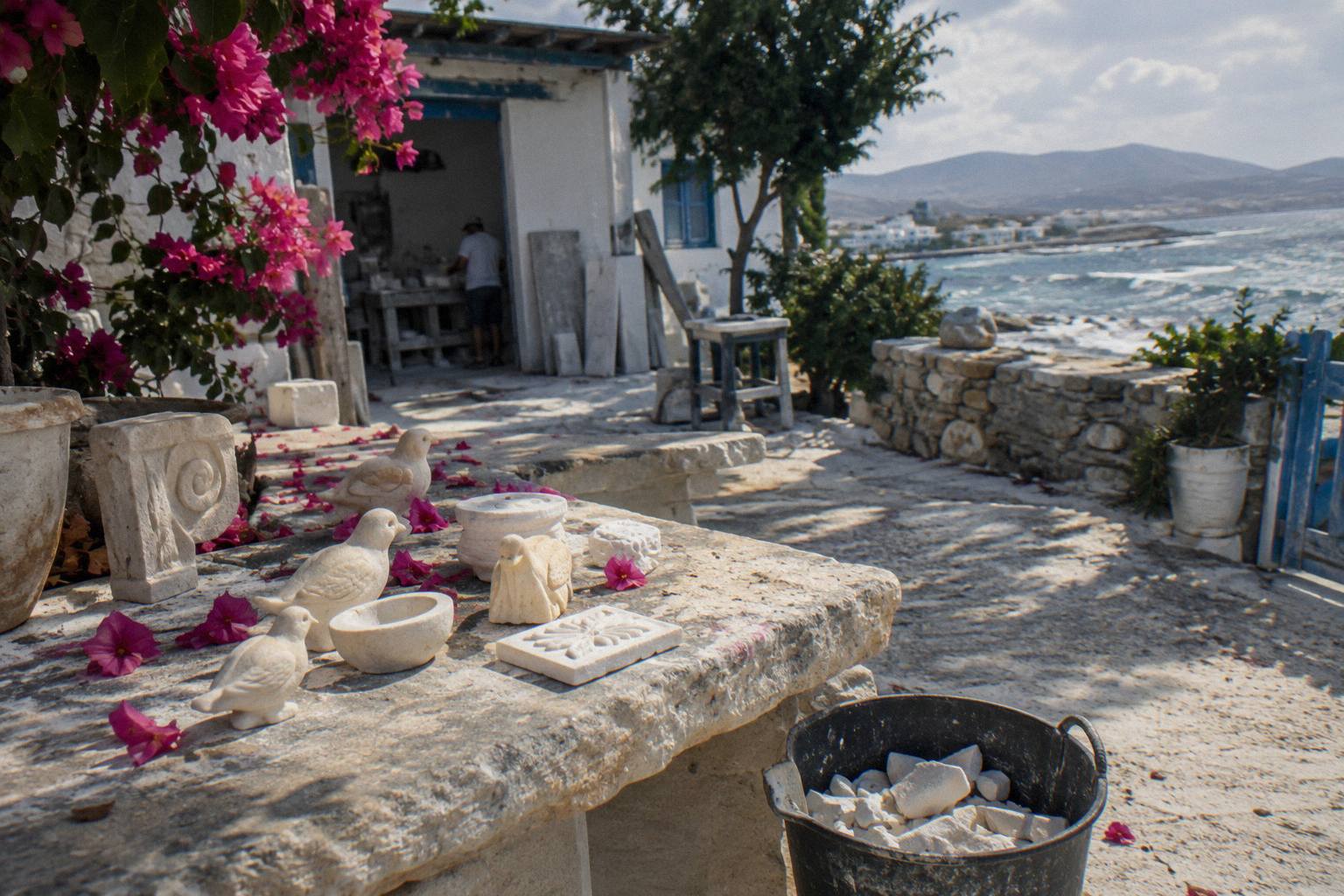
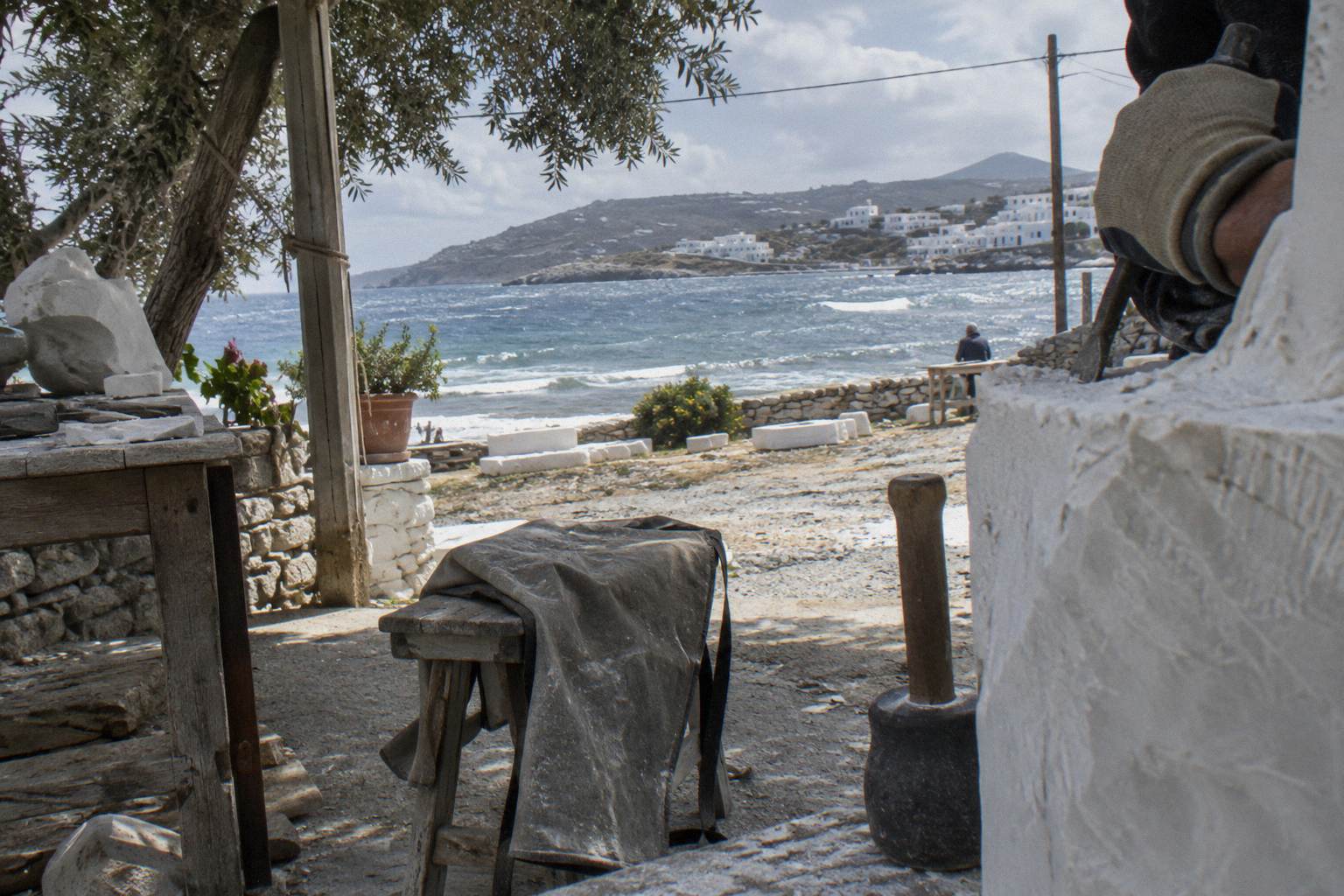
The 3-Hour Marble Carving Workshop is a hands-on session run by Atelier De Jb in an olive-grove workshop, from €85 per person, where each guest carves a piece of Naxos marble into a personal souvenir over 3 hours. Tools, stone, goggles, gloves, ear muffs and dust masks are included; snacks are excluded and the minimum age is 12.
The rating is 4.9 from 136 reviews, which puts it among the most consistently praised experiences on the island. The trip gives no street address for the workshop: the exact location is confirmed on the operator's listing, so anyone booking should read the location line there rather than assume it is walkable from Chora. What the trip does state is the setting, an olive grove, and the full equipment list: material and marble stones, electric and manual tools, and protective gear for eyes, ears and lungs. That protection list matters more than it might look. Marble dust and power tools are the reality of three hours of carving, and the kit is part of the price, not an add-on.
Guests from age 12 up can take part, which makes this one of the few workshop experiences on Naxos open to younger teenagers. Nothing in the trip description promises a finished museum piece; what it promises is the carving session itself and the souvenir you make during it. Snacks are excluded, so it is worth eating beforehand if the session time lands near a meal. Free cancellation applies up to 24 hours before the start, the same terms most island trips carry.
For readers weighing this against a full island day, the guide to which Naxos day tour to book sets out the bus, minibus, private and boat formats side by side. The workshop is a different animal from all of them: shorter, creative, and tied to one place rather than a route. Anyone deciding between the two marble experiences in person can see the 3-Hour Marble Carving Workshop details and check availability for the date in question before committing.
Where Are The Ancient Quarries And Their Colossal Statues?
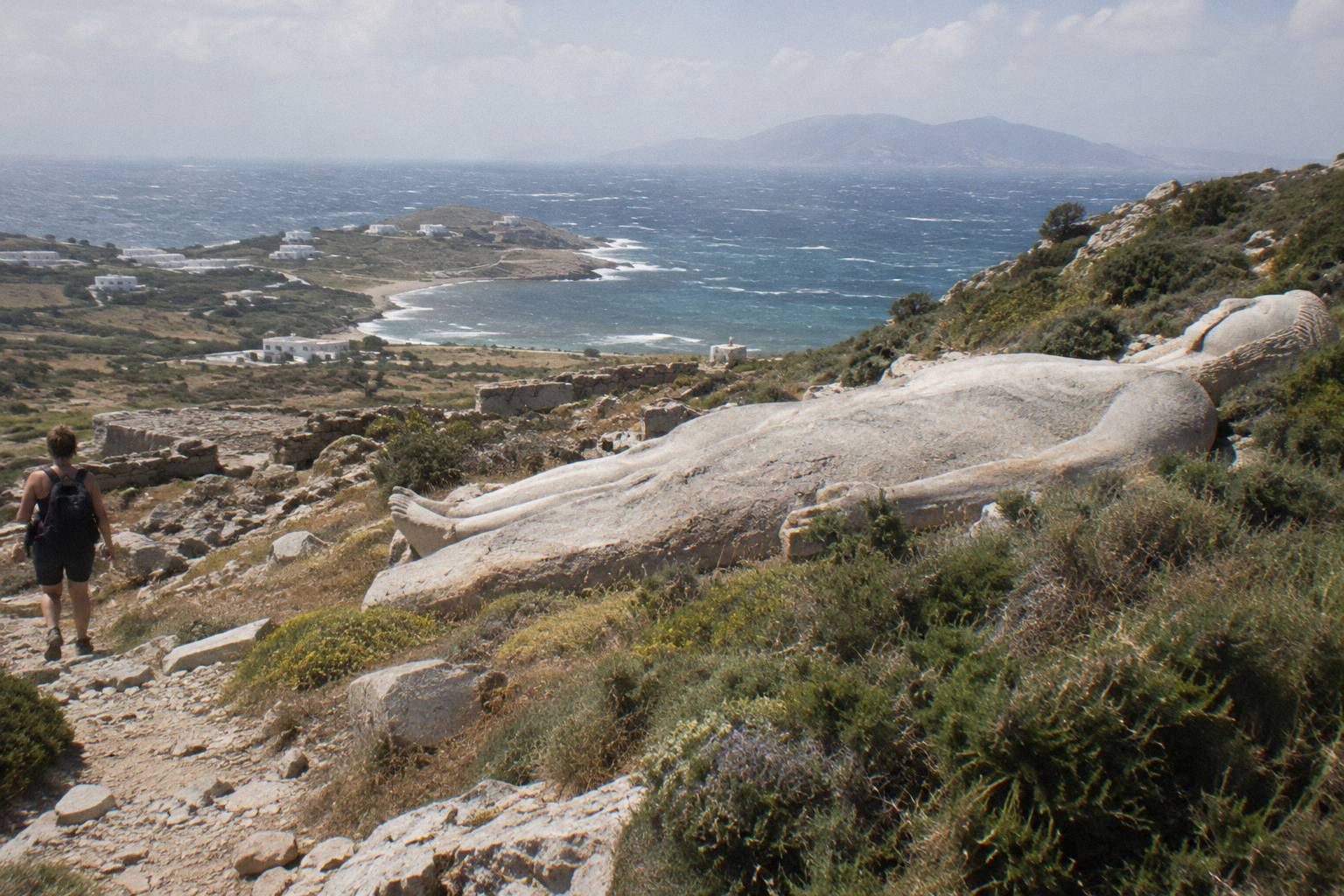
Two ancient marble-quarry sites on Naxos hold abandoned colossal statues, per the Ephorate of Antiquities of the Cyclades: Melanes in the interior, with the Kouros of Flerio, and Apollonas in the north-east, with an unfinished statue of Dionysus or Apollo about 10.7 m tall and about 80 tonnes.
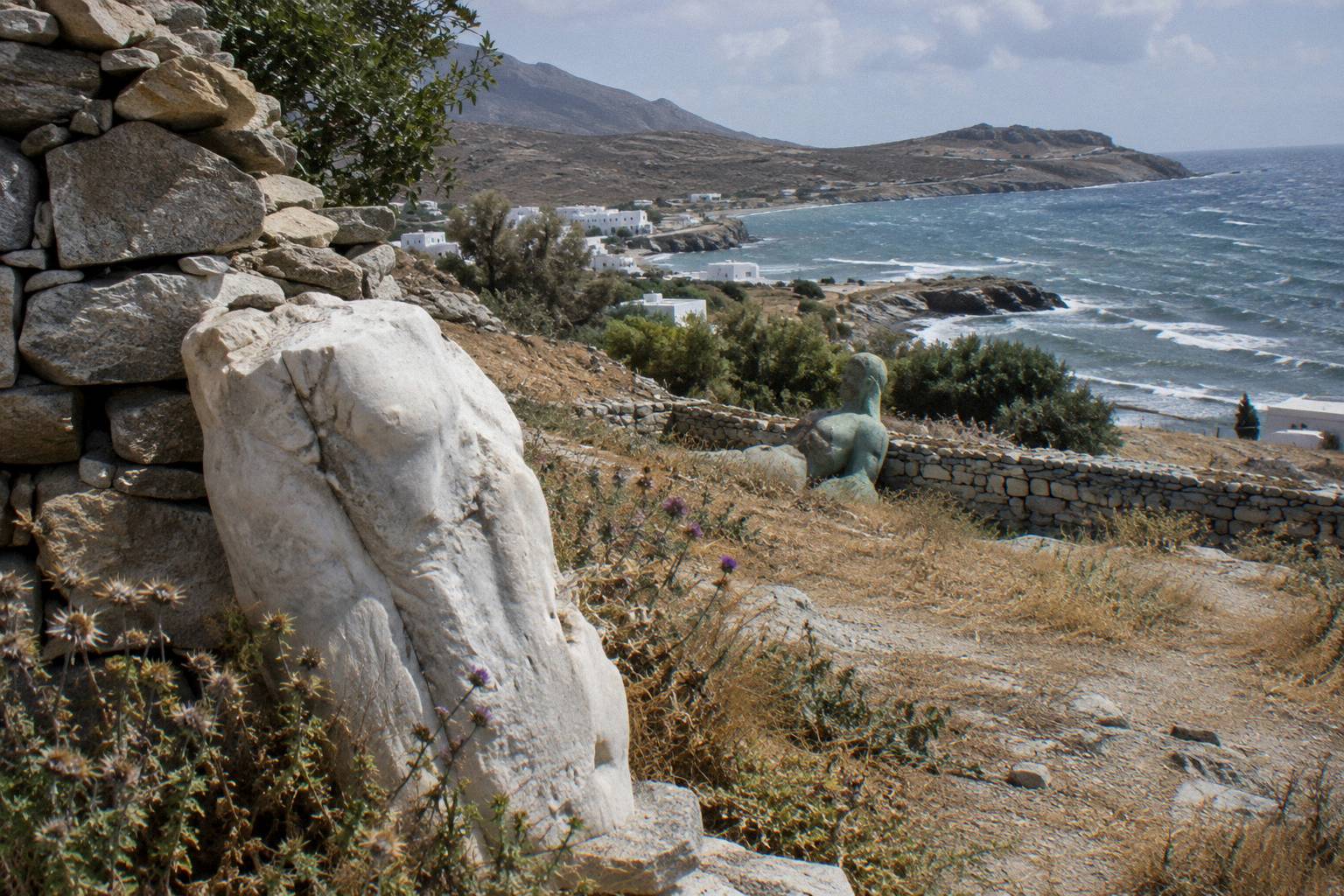
The Melanes site sits a short distance outside the village of Melanes, where the greater area also holds the sanctuary of the water springs at Flerio. The Kouros of Flerio, known locally as "the Greek", is described by the Ephorate as the most easily accessible of the colossal statues and one of the main sights of the island. A second kouros lies in a nearby ravine, reached by a signed path from the first. Both were quarried in antiquity and abandoned where they lay, unfinished, when something went wrong or the order fell through; the Ephorate's page on the three colossal Naxian statues covers all of them.
Apollonas, the fishing village behind a sandy beach that is the most developed settlement of northern Naxos, gives its name to the second site. The Colossus of Dionysus is an unfinished statue of light grey Naxian marble about 10.7 m tall and about 80 tonnes, lying in an ancient quarry near the village, per the published figures for the Kouros of Apollonas. Whether it depicts Dionysus or Apollo is still debated; the bearded face points toward Dionysus, the location toward Apollo, and the Ephorate's own title carries both names.
| Quarry site | Location | Statue | Scale given | How travelers reach it |
|---|---|---|---|---|
| Melanes (Flerio) | Interior, near Melanes village | Kouros of Flerio, "the Greek", plus a second ravine kouros | Colossal, figure not stated by the Ephorate | Island bus tours; also reachable independently near the village |
| Apollonas | North-east, near Apollonas village | Colossus of Dionysus or Apollo | About 10.7 m tall, about 80 tonnes | The 8-Hour Bus Tour stops at Apollonas; the village is also reachable independently |
One thing the quarry sites do not offer is a dedicated guided tour. No trip among the island's offerings is a quarry tour product: the kouroi appear only as stops named in the routes of general island bus tours, which is the subject of the next section. Visitors who want longer at the statues than a bus stop allows can reach both sites independently; the municipal tourism site describes Apollonas and its quarry colossus as a village sight rather than a ticketed attraction.
The two sites also differ in how much else there is to see around them. Apollonas pairs the colossus with a sandy beach, fish tavernas at the harbor and the Fisherman's Feast held in the village, so an independent visit there fills half a day on its own. Melanes pairs its kouros with the sanctuary of the water springs at Flerio, a green inland setting with plane trees and ancient spring works, quite unlike the dry northern coast. Neither site appears on any ticketed attraction schedule with stated hours in the way the Temple of Demeter does; they are open-air antiquities in the landscape, which is exactly why no tour product exists to sell them.
Which Trips On Naxos Actually Pass The Quarry Statues?
Three bus tours name a quarry statue in their routes: the 8-Hour Bus Tour, Lunch Free Time from €30 per person, the Half-Day Small-Group Guided Tour from €30 per person, and Demeter Temple And Mountain Villages from €35 per person. Each names the stop differently, and only the first reaches Apollonas in the north.
The 8-Hour Bus Tour, Lunch Free Time, run by Naxos Bus Transfer, is the only trip that reaches the northern site. Its route names "the colossal kouros at the ancient marble quarries" and the fishing village of Apollonas, alongside the Temple of Demeter and the marble-paved quarters of Apeiranthos. It is rated 4.8 from 1,446 reviews, the largest review count of any trip covered here, and the Demeter entrance is paid in cash on the spot, never included. The full route and its lunch-free-time structure are covered in the guide to the highlights bus tour with lunch in Apeiranthos.
The Half-Day Small-Group Guided Tour, also from Naxos Bus Transfer, names the Flerio valley and its kouros instead, the Melanes site, paired with the Temple of Demeter, Halki and a pottery workshop over 4 hours. It is rated 4.8 from 618 reviews, from €30 per person, with pickup only from preset spots for the 08:30 departure and the Demeter entrance again paid on the spot. The half-day history and culture guide walks through that itinerary stop by stop.
The third option, Demeter Temple And Mountain Villages, rated 4.8 from 34 reviews from €35 per person, names the Kouros of Flerio as an alternative to the Temple of Demeter rather than alongside it, so which of the two a given departure visits is worth confirming with the operator. All three share a pattern worth knowing before booking: the bus stops at a kouros are brief parts of a full island route, not extended visits, and none of the three entries states minutes at any stop. Travelers who want the statues as the main event, not a waypoint, should read the comparison in the next section before choosing.
There is a practical asymmetry between the two quarry stops worth naming here. The Melanes kouros sits inside the island's central sightseeing band, close to Halki and the Demeter temple near Sangri, which is why two different tours fold it into a half-day or a 6-hour-30-minute route. The Apollonas colossus sits at the far north of the island, a district the bus network reaches on its own line, so no tour pairs it with the southern or central sights inside a single day. Choosing between the two statues is really choosing between two halves of Naxos: the green Tragea valley with its villages, or the northern coast with its beaches and emery-mining past.
Carving At The Workshop Or Riding To The Quarries: Which Day Fits?
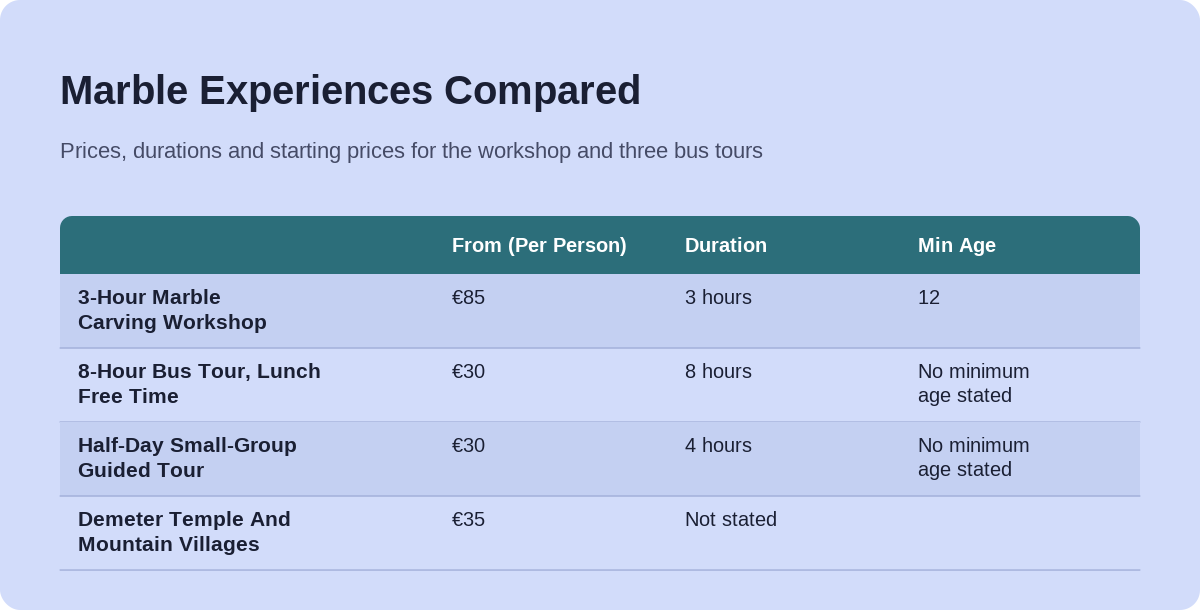
The workshop suits travelers who want to make something in one place over 3 hours from €85 per person, from age 12 up. The bus tours suit travelers who want the island's villages and antiquities, including a quarry statue, over 4 to 8 hours from €30 per person, with no minimum age stated on the two Naxos Bus Transfer day tours.
The price gap is real but so is the format gap. The bus tours cost less because they are shared coach days built around a route; the workshop costs more because materials, tools, protection and a small-group making session are all loaded into three hours. The two experiences do not substitute for each other. A family with a twelve-year-old who loves craft will get more from the olive grove than from a coach seat, while a first-time visitor who has not seen Apeiranthos, Halki or Demeter will find the bus day covers far more ground. The question of whether a guided bus tour of Naxos is worth it compared with renting a car applies directly to the quarry stops, since both sites can be reached independently.
Cancellation terms differ too. The workshop and all three bus tours carry free cancellation up to 24 hours before the start, so a wrong choice can be undone a day ahead. The workshop's operator, Atelier De Jb, can be named and contacted through the operator's listing for the exact workshop location; the bus operators, Naxos Bus Transfer and Naxos Island Tours, confirm their start points the same way.
| 3-Hour Marble Workshop | 8-Hour Bus Tour | Half-Day Small-Group Tour | Demeter Temple And Mountain Villages | |
|---|---|---|---|---|
| Price | From €85 per person | From €30 per person | From €30 per person | From €35 per person |
| Duration | 3 hours | 8 hours | 4 hours | 6 hours 30 minutes |
| Rating | 4.9 from 136 reviews | 4.8 from 1,446 reviews | 4.8 from 618 reviews | 4.8 from 34 reviews |
| Minimum age | 12 | Ask the operator | Ask the operator | Ask the operator |
| Quarry statue named | None | Colossal kouros at the ancient quarries, Apollonas | Flerio valley and its kouros | Kouros of Flerio (alternative to Demeter) |
| Excluded | Snacks | Meals, drinks, Demeter entrance, gratuities | Hotel pickup and drop-off, Demeter entrance | Meals, Demeter entrance, optional kitron visit |
Weather plays into the choice as well, though neither entry makes a weather promise. The workshop runs in an olive grove, so a wet or very hot afternoon changes how pleasant three hours of outdoor carving feels, while the coach day keeps guests under air conditioning between stops. The boat trips elsewhere on the island carry explicit weather-cancellation clauses and the captain decides routes; the land trips here do not run on that model, so the practical reading is simply that an open-air session is more exposed to the day than a bus seat. Neither entry states a season, and no month should be assumed for either.
What Does The Marble Workshop Cost And What Is Included?
The workshop costs from €85 per person for 3 hours. Included: the marble itself, electric and manual tools, goggles, gloves, ear muffs and dust masks. Excluded: snacks. The rating is 4.9 from 136 reviews, and free cancellation applies up to 24 hours before the start.
Prices vary by date and group, and the operator's listing confirms the final figure for any given day. What the €85 buys is everything needed to carve: the inclusions list "Material, marble stones" first, which means guests are not paying extra for the block they work on, and the souvenir leaves with them. The protection kit, goggles, gloves, ear muffs and masks, is unusual to see stated so completely on an experience entry and signals a working atelier rather than a demonstration.
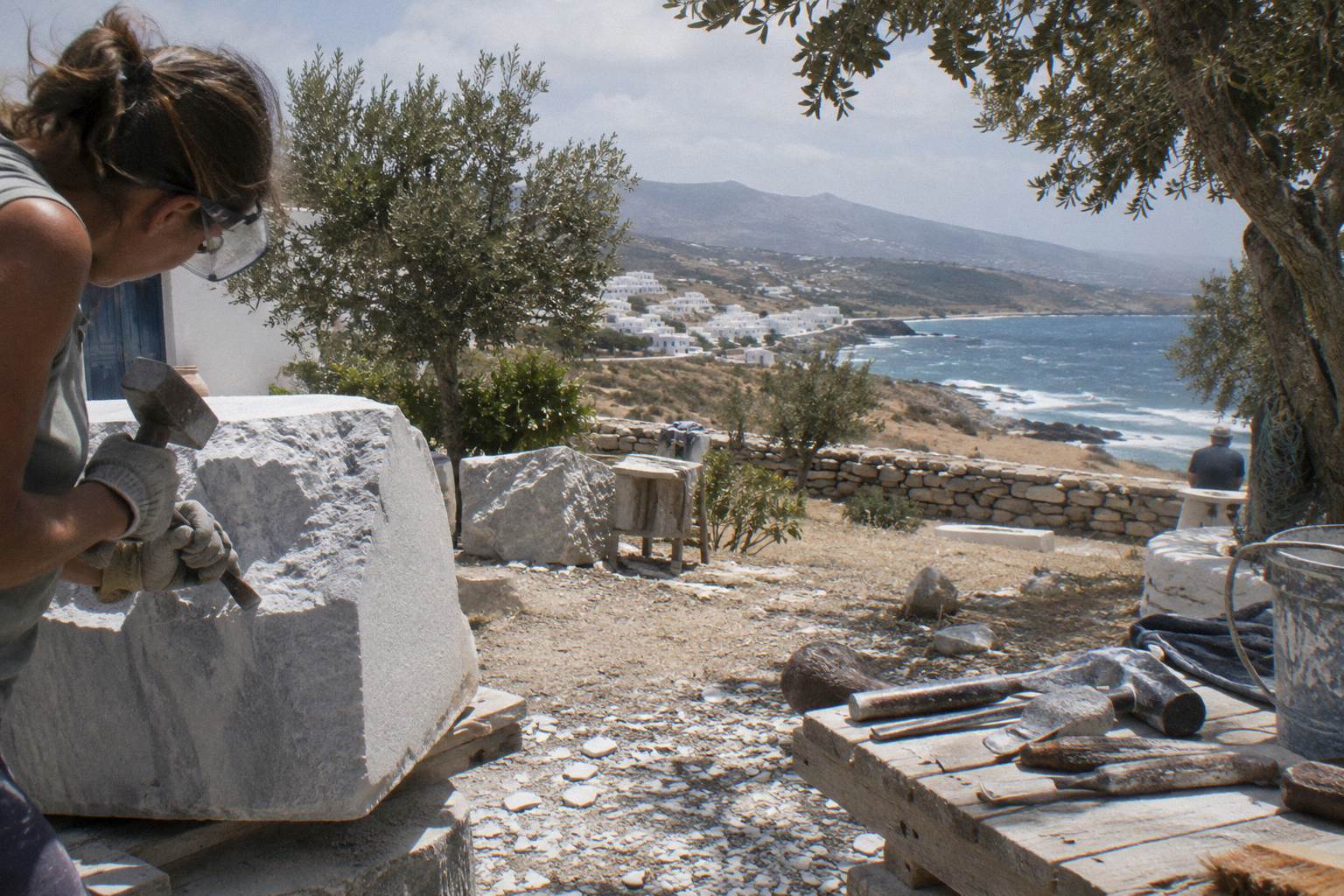
The one exclusion is snacks, so the session is best scheduled around a meal rather than instead of one. The minimum age of 12 is the only participant restriction stated. Nothing in the trip description limits group size or promises a particular souvenir shape; the format is carve-your-own, with the outcome depending on the three hours themselves.
Readers comparing this against the island's other hands-on days can look at the cooking classes, farm and town compared guide, which prices the same kind of small-group making sessions at the island's farms. The workshop sits in the same bracket as those, from €85 to €100 per person for a half-day session, and far above the shared bus tours, a spread the guide to what day tours and boat trips on Naxos cost sets out island-wide.
| Hands-on session | Operator | Price | Duration | Minimum age |
|---|---|---|---|---|
| 3-Hour Marble Carving Workshop | Atelier De Jb | From €85 per person | 3 hours | 12 |
| Half-Day Farm Cooking Class | Basiliko Naxos Cooking Lessons | From €100 per person | 4 hours | Ask the operator |
| Wood-Fire Cooking Class And Farm Visit | Perivoli Naxian Farm | From €100 per person | 4 hours 15 minutes | Ask the operator |
| Market Visit And Cooking Class | Trekking Hellas | From €115 per person | 4 hours | 7 |
The table shows the workshop as the shortest and cheapest of the island's hands-on sessions, and the only one with no food attached. For a traveler who wants the making without the meal, that is an advantage: less time committed, less money spent, and a souvenir that outlasts the day. For one who wants the meal, the farm classes bundle lunch, wine and often dancing into their price, which is what the extra €15 to €30 per person buys. The ratings are all in the same high band, from 4.9 to 5.0, each with a substantial review count, so the choice between them is about format rather than quality.
What Trips People Up When Choosing Between Marble Days On Naxos?
Three things trip people up: expecting a dedicated quarry tour when none exists, expecting the bus stop at a kouros to last longer than the route allows, and expecting the workshop address to be published when the trip description gives only an olive-grove setting. Each is settled by reading the trip's own route line before booking.
The first is the most common. Search for a Naxos marble quarry visit and the results describe the kouroi as if a ticket exists; it does not. The statues are reached either independently, at Melanes near the village and at the quarry by Apollonas, or as named stops on the three bus tours above. The Half-Day Small-Group Guided Tour, rated 4.8 from 618 reviews from €30 per person, is the shortest of the three at 4 hours and the most direct way to see the Flerio kouros on a guided day, and its full stop list is in the Temple of Demeter on a guided tour guide, which covers the site the half-day pairs with the quarry.
The second is timing. None of the three bus entries states minutes at any stop, and a colossal statue lying in a quarry is a ten-minute sight for most visitors anyway. Anyone who wants to linger, photograph properly or walk the signed path to the second Melanes kouros should build that into an independent visit rather than expect it from a coach route. The third is the workshop's address: the trip names an olive-grove workshop and nothing more specific, and the location is confirmed at booking. Assuming it is in Naxos Town is the mistake; ask first.
A fourth trap belongs to the Demeter Temple And Mountain Villages day specifically: its route names the Kouros of Flerio as an alternative to the Temple of Demeter, so a guest who books it expecting both will be disappointed on the day. The alternative structure is a feature, not a defect, since it lets the tour adapt, but it means confirming which stop the chosen departure includes before paying. The same caution applies to the 8-Hour Bus Tour on Tuesdays, a day on which island sites run different schedules; the operator confirms what the route does on any given date.
A smaller trap applies to combining the two. The workshop runs 3 hours and the half-day bus tour 4 hours with an 08:30 departure, so on paper both fit in one day; in practice the workshop's confirmed start time and location decide, and neither is stated far enough ahead to plan around before booking. Travelers set on both should book the bus day first, since its 08:30 departure is fixed, then fit the workshop around it. The question can you do a Naxos village tour without a car covers the independent route to Melanes for anyone skipping the coach entirely.
For travelers whose marble interest is really an active-day interest, the island also runs kayak days to Rina Cave and other outdoor sessions; the Kayaking With Snorkeling And Lunch day from Kalandos beach, rated 5.0 from 259 reviews from €135 per person, is the most-reviewed active option among them. Marble it is not, but it fills the same slot in a week that wants one hands-on, one-destination day rather than another bus route.
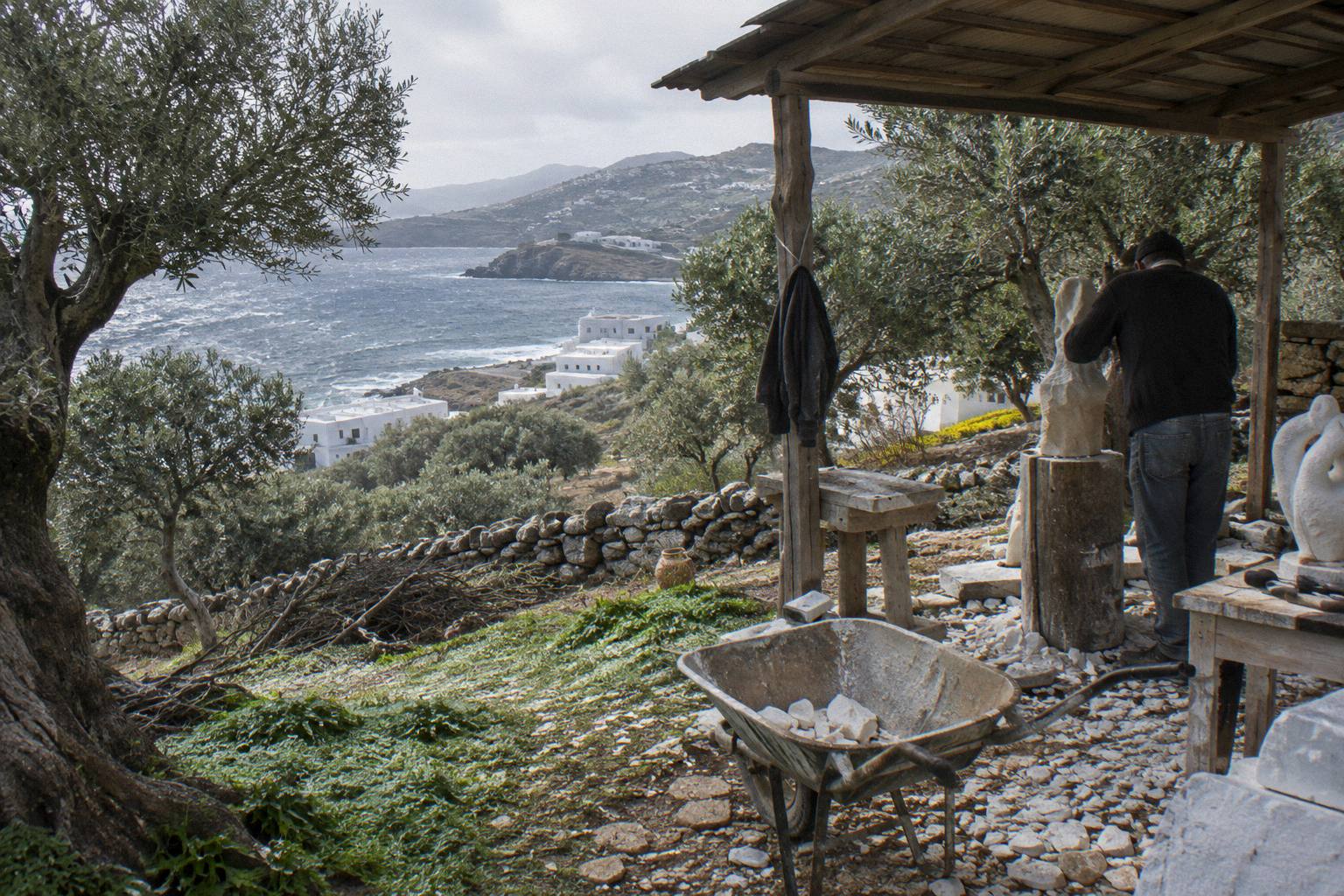
The short version of the whole decision: buy the workshop for making, buy the bus tour for seeing, and know which kouros each option names before paying. The Flerio kouros near Melanes is the most easily accessible of the colossal statues per the Ephorate, which is why two of the three bus routes use it; Apollonas and its 10.7 m colossus belong to the 8-hour northern route alone. Anyone who wants both statues and a carved souvenir needs two separate days, one at the atelier and one on the road. A week on the island accommodates all of it comfortably, and the marble thread running through the Portara, the villages and the quarry colossi is one of the clearest ways to read Naxos as a single story rather than a list of stops.
Common Questions About Naxos Marble
Is There A Guided Tour Of The Ancient Marble Quarries On Naxos?
No dedicated quarry tour exists. The kouroi at Melanes and Apollonas appear as named stops on three island bus tours: the 8-Hour Bus Tour, Lunch Free Time (from €30 per person), the Half-Day Small-Group Guided Tour (from €30 per person) and Demeter Temple And Mountain Villages (from €35 per person). Both sites can also be visited independently.
How Much Does The Naxos Marble Carving Workshop Cost?
From €85 per person for the 3-hour session. The marble, tools and all protective equipment are included; snacks are excluded. The trip is rated 4.9 from 136 reviews and carries free cancellation up to 24 hours before the start.
Which Tour Goes To The Kouros Of Apollonas?
The 8-Hour Bus Tour, Lunch Free Time, run by Naxos Bus Transfer, names the colossal kouros at the ancient marble quarries and the village of Apollonas on its northern route. It costs from €30 per person and is rated 4.8 from 1,446 reviews.
Can Children Do The Marble Workshop?
Yes, from age 12. That is the minimum age stated on the workshop entry, and it is the only participant restriction given. The two Naxos Bus Transfer day tours state no minimum age.
Where Is The Marble Workshop Located?
In an olive-grove workshop. The trip gives no street address; the exact location is confirmed on the operator's listing at booking, so do not assume it is in Naxos Town.
How Big Is The Kouros Of Apollonas?
About 10.7 m tall and about 80 tonnes, an unfinished statue of light grey Naxian marble lying in the ancient quarry near Apollonas. Whether it depicts Dionysus or Apollo is still debated.